
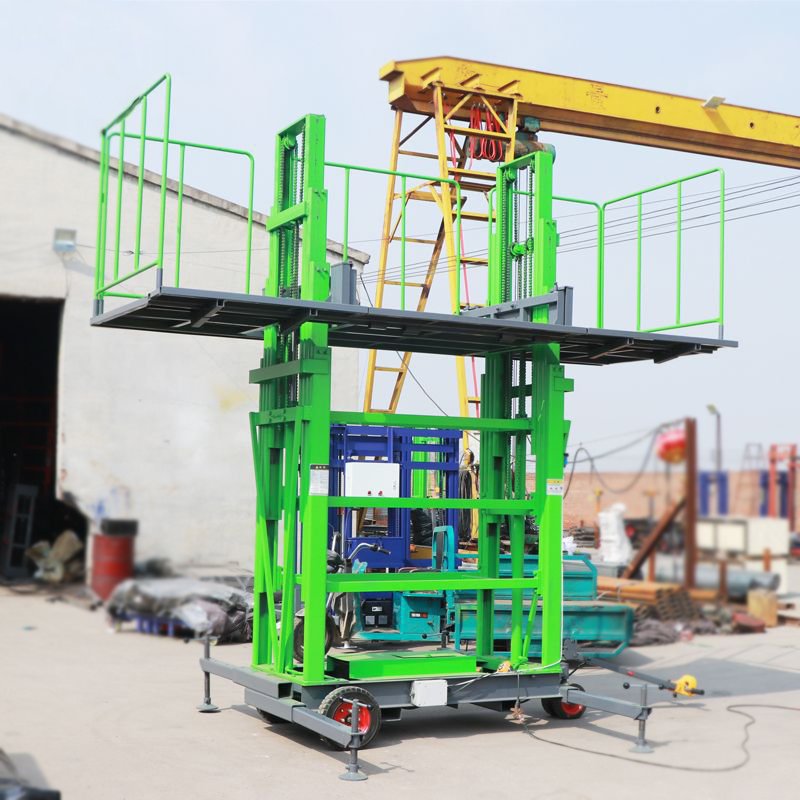
In modern construction projects, especially in bricklaying and plastering, the efficiency and safety of working at heights are crucial. Traditional scaffolding often slows down construction progress, requires repeated material handling, and increases safety risks. Therefore, more and more construction teams are adopting hydraulic aerial platform as a practical alternative for vertical material lifting and working at heights.
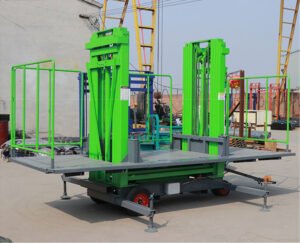
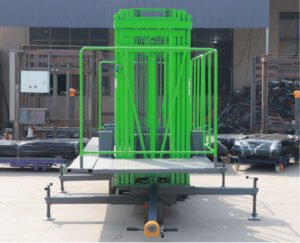
This article explains the application of hydraulic aerial work platforms on construction sites, their most important technical specifications, and why they are becoming important tools for masonry-related tasks.
Challenge of Material Handling in Masonry Work
Bricklaying and plastering operations require frequent handling of heavy materials such as bricks, mortar, and tools. Using manual handling or makeshift scaffolding can lead to:
-
Increased labor intensity
-
Reduced work efficiency
-
Increased risk of falls and material drops
-
Frequent interruptions during material transfer
Hydraulic aerial work platform help solve these problems by combining vertical lifting with a stable working surface.
What Is a Hydraulic Aerial Work Platform?
A hydraulic aerial work platform is a lifting system designed to safely and efficiently elevate workers and materials to a specific height. Unlike mobile scaffolding, rail-mounted hydraulic platforms offer vertical stability and controllable movement, making them suitable for high-intensity construction environments.
These hydraulic working platform are particularly suitable for masonry and wall construction, where large quantities of materials need to be repeatedly lifted.
Height and Load Capacity Designed for Construction Sites
Choosing the appropriate working height and load capacity is crucial for both on-site efficiency and safety.
Available lifting heights:
-
4 m
-
6 m
-
8 m
-
10 m
-
12 m
These height options cover most low- to mid-rise masonry and façade work.
Load capacity options:
-
1000 kg
-
1500 kg
The high load-bearing capacity allows workers to move bricks, mortar, and tools simultaneously, reducing the number of times they need to move them and improving work efficiency.
Large Working Platform for Better Productivity
This lifting work platform boasts a spacious 4000 × 1450 mm platform size, providing:
-
Ample space to accommodate multiple workers
-
Space for storing building materials and tools
-
Greater stability during plastering and bricklaying operations
The larger platform directly reduces construction interruptions and increases daily output on the construction site.
Rail-Guided Structure for Stability and Safety
This hydraulic work platform lift uses a guide rail structure to ensure:
-
Smooth vertical movement
-
Precise positioning to working height
-
Less swaying amplitude compared to traditional scaffolding
Made of high-strength carbon steel, its structural design can withstand heavy loads and harsh construction environments.
Applications
Hydraulic aerial work platforms are widely used in:
-
Masonry construction
-
Wall plastering
-
Interior and exterior wall construction
-
nstruction material hoisting
In these applications, hydraulic working platform can significantly reduce manual labor while improving overall site safety.
Industry Trend: Hydraulic Platforms Replace Scaffolding
With rising labor costs and increasingly stringent safety standards, construction companies are increasingly adopting hydraulic lifting solutions. Compared to scaffolding, hydraulic aerial platforms offer faster setup, higher load-bearing capacity, and a more stable working environment.
This trend reflects the construction industry’s shift towards mechanized and safer construction methods.
Conclusion
Hydraulic aerial platform have become an ideal solution for masonry and construction projects, offering both lifting and high-altitude work capabilities. These platforms can lift heights from 4 to 12 meters, have a maximum load capacity of 1500 kg, and are equipped with large steel platforms, bringing significant improvements in efficiency and safety to modern construction sites.
📩 Learn More
If you are evaluating hydraulic aerial work platform for bricklaying, paving, or construction projects, understanding the height, load, and structural requirements is the first step in choosing the right solution.
📞+8615538387011
💌info@sientechnology.com
Hot Tags:Forklift Trucks,Lift Platform,Cart & Trolly,Crane,Hoist & Winch